
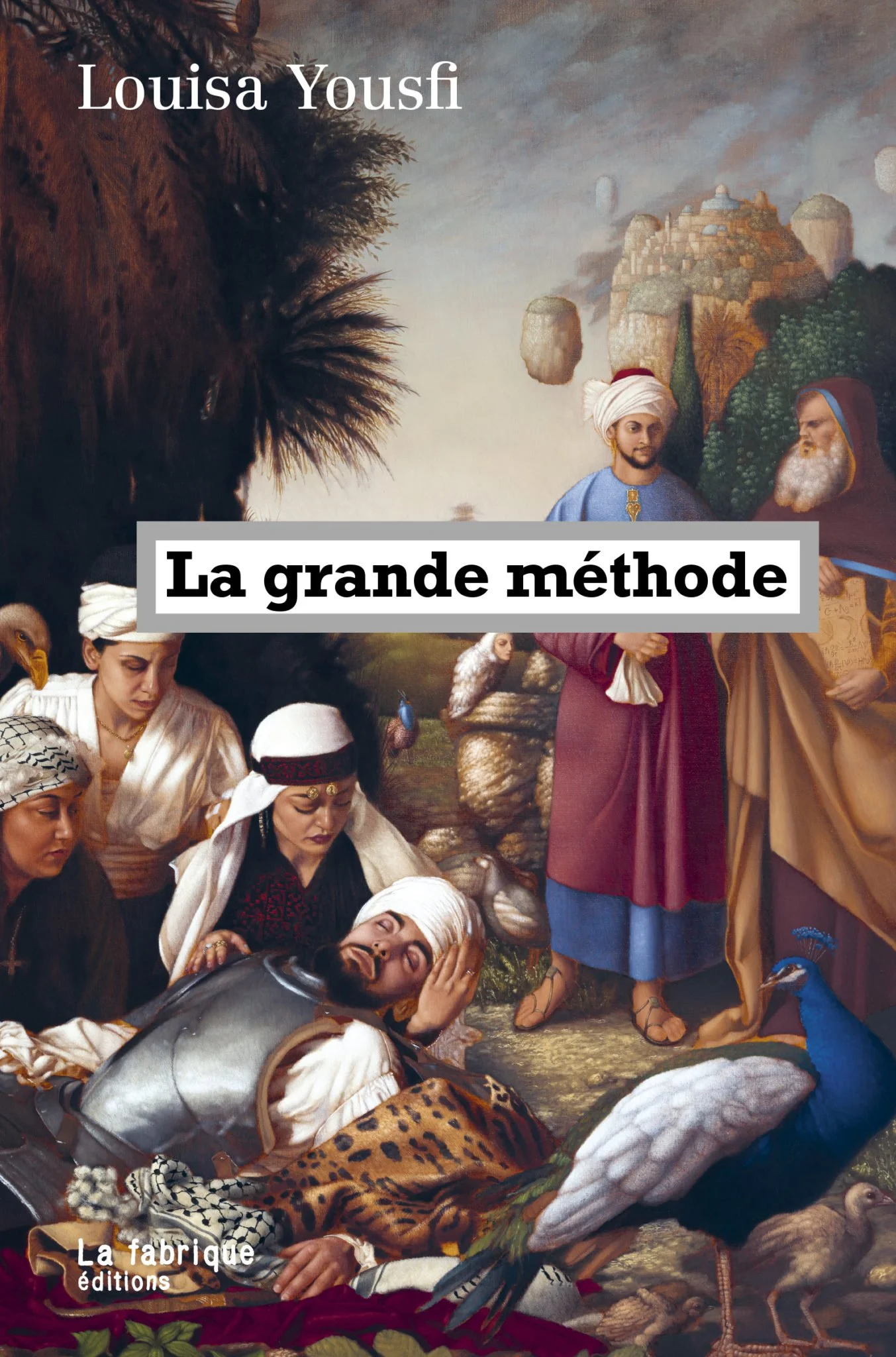
the GREAt method
Louise Yousfi
La fabrique, 180 pages, 2026
Rights sold in Catalan, Italian, Swedish, Dutch and German.
Why you should take a look at it:
√ A poetic, profound, and fiercely unique literary voice
√ A genre-defying work weaving autobiographical narrative, political essay, and spiritual reflection
√ A powerful exploration of grief, postcolonial memory, and the invisible inheritances that shape us.
A work of radiant pages that opens a space of experimentation and liberation
----Annie Ernaux, Novel Prize in Literature
One could say that the great method is a science of narrative. It does not produce truths but rather creates the conditions for their transmission. ----Louisa Yousfi
Following her acclaimed debut In Defense of Barbarism, Louisa Yousfi returns with The Great Method, an incandescent literary and metaphysical quest. Following an immigrant worker’s death, his daughter travels with her family to Algeria to repatriate his body and take part in his wake and burial. This experience brings her to question her sense of self and place as a descendant of postcolonial immigration, caught between two worlds. It also leads her to reflect on her mission in life, her politics, her relation to Islam, as well as her vocation as a writer.
While Louisa Yousfi draws upon and fictionalizes events from her own life, this book’s experimental quality—alternating between different styles and voices—departs from the introspective, deeply personal framework of traditional testimony. Instead, scenes unfold through the eyes of others: an immigration officer at the Algerian consulate issuing a visa, an uncle in a car, and even a flock of birds. The text weaves together several distinct threads: myths rooted in medieval Islamic and Persian Sufi literature, dialogues between a spiritual master and disciple, critical reflections on the ethical stance of storytelling in troubled times, and a profound exploration of the second-generation immigrant experience that examines the complex intersections of language and cultural identity.
In this compelling and strikingly original work, Yousfi crafts a literary practice aimed at safeguarding the core of oneself—which the assaults of exile have eroded but failed to destroy—while remaining wary of the pitfalls of insincerity and posturing. Ultimately, the book’s poetic and political “method” invites her generation to claim their place in a broader ancestral, spiritual, and historical narrative.
Louisa Yousfi is a journalist and literary critic. She is the author of In Defense of Barbarism: Non-Whites Against the Empire / Rester barbare (La Fabrique, 2022, Verso, 2025).