
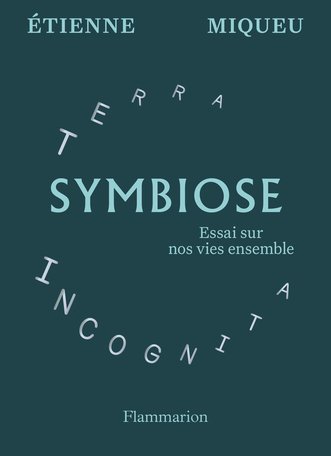
symbiosis: on living together in practice
Étienne Miqueu
Flammarion, 320 pages, 2025
Why you should look at it:
√ An brilliant inquiry into the political potential of symbiosis in contemporary life
√ A timely blueprint for how to live together in a fracturing world
√ A A innovative interdisciplinary essay by a promising young philosopher
How to live together? Can differences coexist without any conflict? What keeps a collective from falling apart? The biological concept of symbiosis offers an unexpected yet powerful framework for navigating these political and ethical questions. Tracing the varied forms of intertwined life—from the lichens studied by 19th-century botanists and bacterial microcosms to anarchist mutualism and contemporary theory—philosopher Etienne Miqueu explores how symbiosis provides a vital model for coexisting in the world to come.
Building on the work of biologist Lynn Margulis, Miqueu traces the concept of symbiosis back to 19th-century life sciences. But in recent decades, a vast symbiotic lexicon beyond biology has emerged .In philosophy and the environmental humanities—from Gilbert Simondon, Gilles Deleuze, and Félix Guattari to Édouard Glissant, Michel Serres, and Donna Haraway—terms like networking, interweaving, arrangement, rhizome, and hybridization abound.
Yet if so many scholars maintain that existence is fundamentally relational, Miqueu asks, how are we to face “the astonishing rehabilitation of eradication as a condition of social cohesion?” In search of a response, Miqueu draws inspiration from symbiosis and its intertwined worlds to reimagine our lives together beyond fantasies of competition and purity, exclusion and homogeneity.
Etienne Miqueu is a French researcher, author, and PhD candidate in the Department of French Literature, Thought, and Culture French at New York University. His research lies at the intersection of the philosophy of science, environmental humanities, and political theory.