
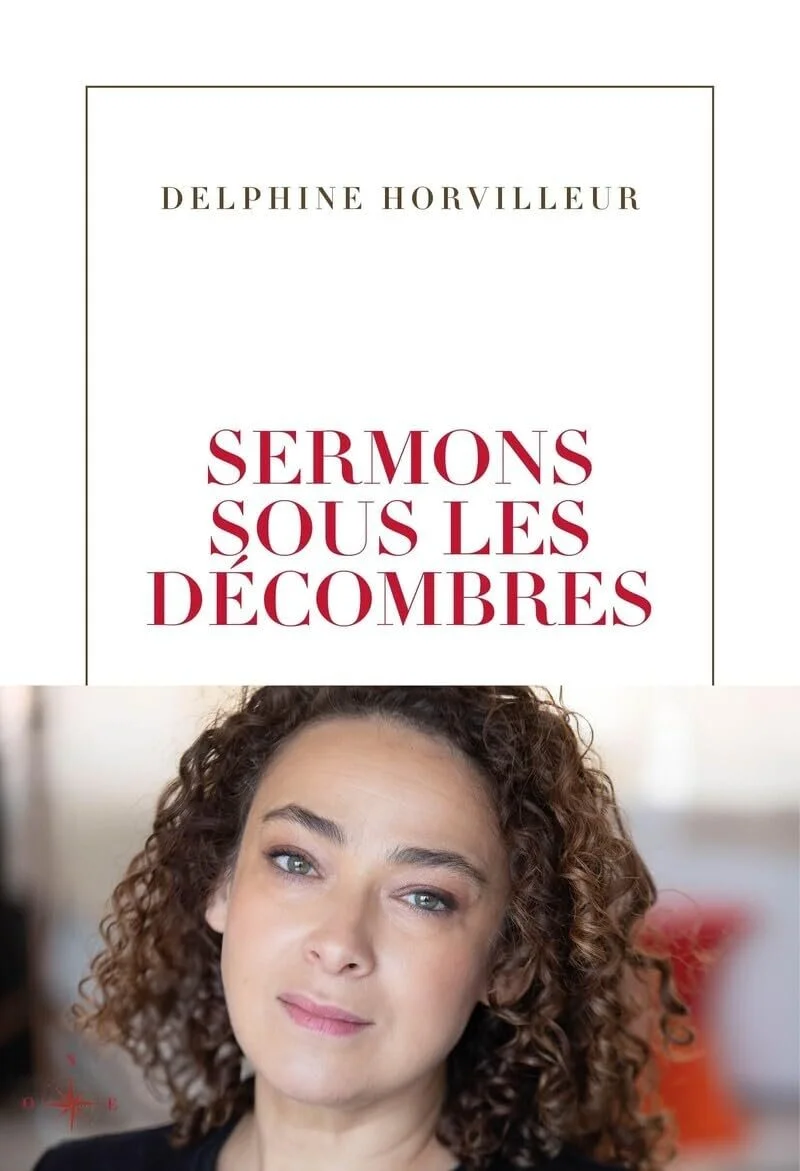
SERmons from the ruins
Delphine Horvilleur
Plon, 240 pages, 2026
Why you should look at it:
√ A vital record of crisis
√ A masterful Interdisciplinary approach
√ Tackles urgent ethical dilemmas
During two years of conflict, Rabbi Delphine Horvilleur turned to sacred texts to uncover words strong enough to withstand disaster. Her book compiles these "Words on the Torah," introduced by a lengthy personal prologue, to illuminate our troubled times through the lens of Jewish tradition.
A substantial personal introduction of some forty pages is followed by sixteen chapters of commentary on biblical texts delivered during religious services. Each chapter begins with an introductory paragraph recalling the date and current political context, followed by a provisional conclusion.
Each sermon uses a specific, structured approach to interpret modern global chaos. It combines three key elements:
Talmudic Hermeneutics: Deep textual interpretation of ancient Jewish law and tradition.
Current Events Analysis: A direct critique of contemporary global politics and conflicts.
Personal Reflections: Subjective insights and modern individual experiences.
By reframing traditional scriptures, this method sheds light on modern crises. It allows ancient wisdom to bring clarity to a confusing present.
Horvilleur questions the Jewish sovereignty and ethics:
· Identity: Is Judaism defined by ancient tradition, or is it continually shaped by modern practice?
· Power Dynamics: How does a group shifting from a historical diaspora minority to a sovereign majority in Israel alter its duty to protect other minorities?
· The "Chosen People": Does this concept, once a vital source of comfort and survival against annihilation, hold relevance under modern state sovereignty?
· The Ethical Dilemma: Are leaders forced to choose between using unjust force to ensure immediate physical survival today, or maintaining strict moral ethics to preserve spiritual integrity for tomorrow?
Ultimately, Sermons From The Ruins offers a timely, dynamic redefinition of Jewish identity. Rabbi Delphine Horvilleur rejects the notion that Judaism is either defined by human flaws or frozen as an abstract theory detached from reality. Instead, she portrays it as a resilient, living dialogue.
By framing faith not as a rigid dogma but as an ongoing conversation, Horvilleur delivers a vital tool for the modern reader. Her work provides a crucial moral blueprint to help navigate, understand, and withstand contemporary global crises.
Delphine Horvilleur is one of the few female Rabbis in France. She was ordained in America, as there was no possibility to study in France as a woman, and is the leader of the Liberal Jewish Movement of France. Her works explore Jewish thought, grief, gender roles, and contemporary social crises. Her writings have appeared in the Washington Post and Haaretz, and two of her books have been published in the US by Europa Editions (Living with our Dead in 2024 and How Isn’t It Going? in 2025). She lives in Paris.