
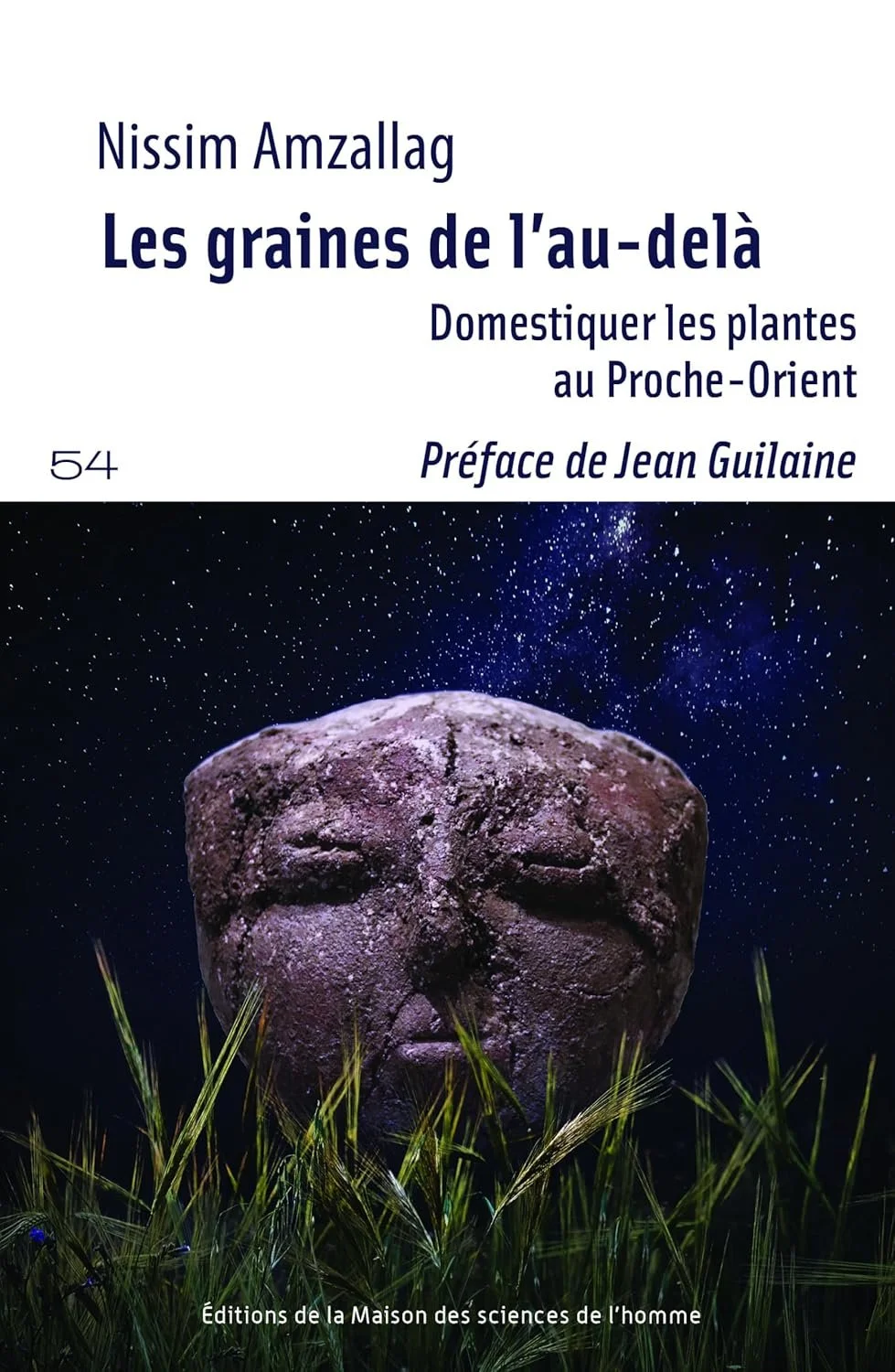
seeds from the afterlife: the early stages of plant domestication in the ancient near east
Nissim Amzallag
Éditions de la Maison des Sciences de L’Homme, 345 pages, 2023
✨ Working translation of the Introduction chapter available upon request
Why you should look at it:
√ An entirely new perspective on the first stages of plant domestication in the Near East
√ The bringing together of recent archaeological, biological, and anthropological discoveries
√ The discovery of a cosmic dimension stimulating the earliest phases of plant
cultivation.
Why did humans begin cultivating wild plants that grew in abundance around them? And how did the idea of transforming wild plants into domestic ones first germinate in the human mind? In his compelling new book, Nissim Amzallag provides a new answer to these age-old questions.
Amzallag demonstrates that improvement of food production was not the first motivation for plant cultivation in the Near East. Rather, this practice reflects a will to transfer the vital forces of the deceased to the wild plants germinating on their graves. More than 12,000 years ago, such a stimulus led to the formation of lineages of seed-ancestors from which the first domestic plants gradually emerged. Simultaneously, the relationship between the mortuary universe and the plants undergoing domestication initiated a revolution in mentalities, the memory of which has been preserved by the religions and mythologies of the Near East, Egypt, and Greece.
Drawing on the latest discoveries in archaeology and biology, Seeds from the Afterlife invites readers to discover a mental universe as subtle as it is distant from purely pragmatic motivations, and which laid the foundations for the first civilizations. It reveals why humans positioned themselves at the center of a new world shaped by their ancestors, a place they would never relinquish.
Nissim Amzallag, a biologist and an historian, is a researcher in Plant sciences and in Ancient Near East history. He is the author of more than 120 scientific articles and seven books in plant physiology, biological evolution, history of biology, philosophy of science, cultural dimension of ancient techniques, archaeology of the Near East, and the origin of Yahwism. In 2023, he published YHWH and the origins of Israel: Insight from the Archaeological Record (Cambridge University Press).