
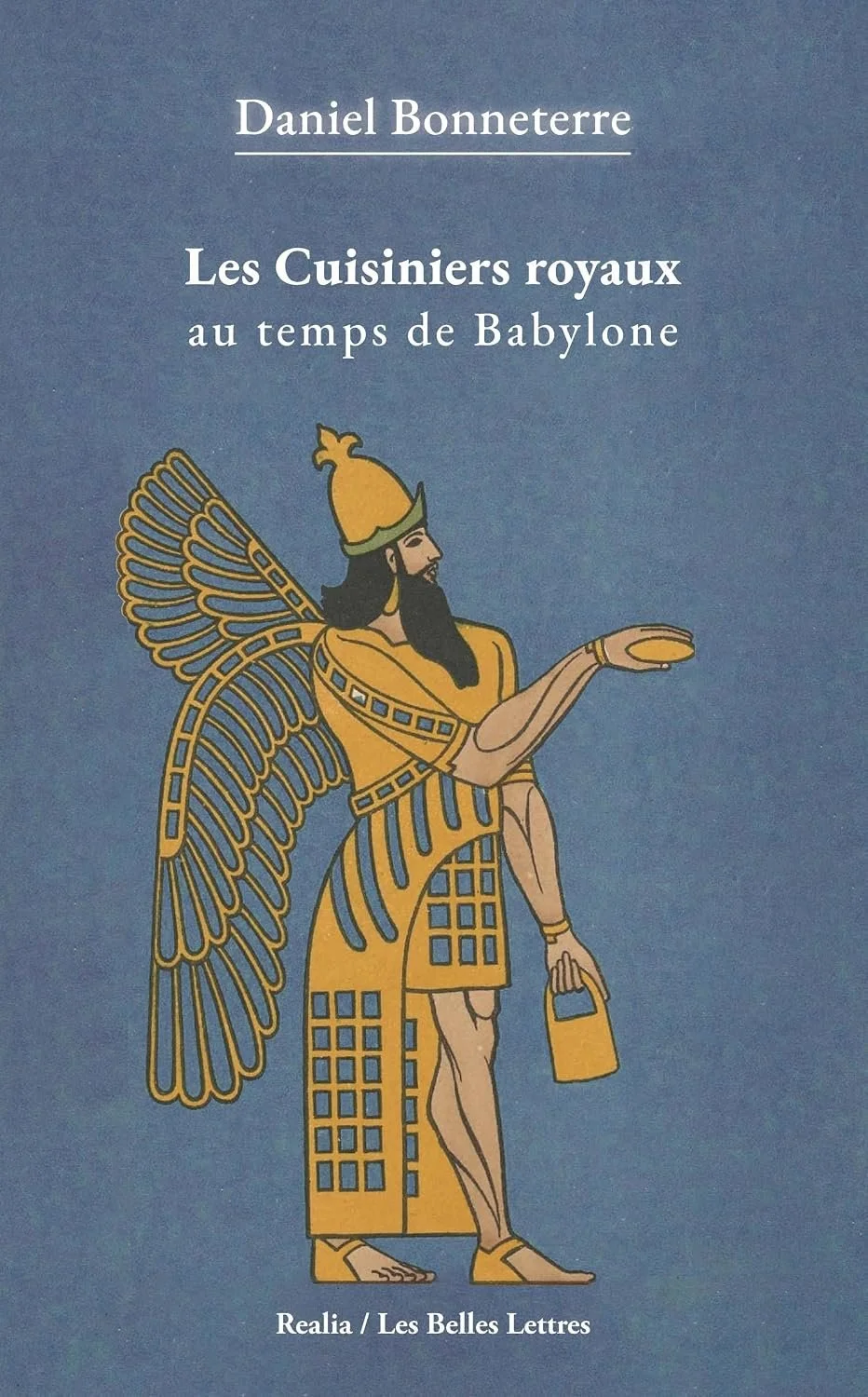
ROYAL COOKS IN THE TIME OF BABYLON (C.1750 BCE)
Daniel Bonneterre
Les Belles Lettres, 272 pages, 2026
Why you should look at it:
√ An immersive journey into ancient Mesopotamian cuisine
√ The unlocking of ancient history through recently decoded cuneiform tablets
√ An enjoyable, accessible read for historians, foodies, and curious minds alike.
The ancient Babylonian world long remained little known, reserved for a small circle of scholars. Thanks to exceptional discoveries —most notably tens of thousands of texts recovered from destruction—this world has begun to reveal its secrets after four thousand years of silence.
Daniel Bonneterre proposes an original approach to everyday life by focusing on the kitchen, offering an exploration of the world of the king’s cooks: masters of ingredient transformation and attentive participants in religious cults.
The investigation takes us through the palaces of King Hammurabi of Babylon (ancient city) around 1750 BCE, describing foods, ingredients, plants as well as unusual creatures, dietary prohibitions, and the dangers associated with them. What were these dangers, these techniques, these recipes used by royal chefs? What is their legacy today? Do modern tables manners have their origins in Babylon?
To address, these questions, Bonneterre draws on a wide range of sources, including myths, narratives, and correspondence—royal, priestly, and from women in positions of power—as well as documentary texts captured on the spot, such as receipts and bills, court and building notes.
The emphasis is placed both on social and religious practices (hospitality, conviviality, aesthetics, prohibitions) and on material culture, seen as the foundation of an effective tradition (hygiene and health.) The findings presented here are as surprising as they are original: the symbolic logics at work in ancient culinary culture are decoded here for the first time.
Daniel Bonneterre Is a specialist in ancient history. He gained his doctorate in languages and civilizations of the Ancient Near East from Johns Hopkins University. He has taught in the United States and in Canada and conducted archeological research in France, Italy, Syria, and Israel. His publications focus on the relationships between textual sources and Anthropological realities